
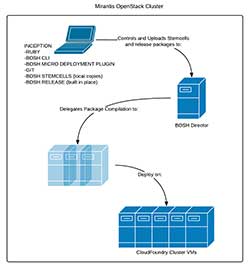
Mirantis and Pivotal have announced that they intend to integrate Cloud Foundry with OpenStack. The detail of the announcement was laid out in a blog by John Jainschigg, Technical Solutions Marketing Manager, Mirantis. In his blog Jainschigg writes:
“As a result of the collaboration, Pivotal customers will soon gain the option of using Mirantis OpenStack’s easy-to-deploy OpenStack distribution to create cost-effective, robust, production IaaS under Pivotal Cloud Foundry and Pivotal’s related products. Mirantis OpenStack users will gain the ability to deploy — rapidly and simply — these leading container-based PaaS solutions, enabling sophisticated application lifecycle management.”
One of the key goals here is simplicity. At present, developers can download and use an existing step-by-step runbook (registration required) to install Cloud Foundry on Mirantis OpenStack. make this happen. However, it is not intuitive, requires a fair amount of developer knowledge and is not something operations teams would want to do as part of their deployment processes.
Mirantis helping Pivotal integrate to OpenStack
The important part of this announcement is that Mirantis will help Pivotal integrate Cloud Foundry into the OpenStack Murano application catalogue. This will then enable developers to select Pivotal Cloud Foundry and install it with a single click.
This deal is good news for Pivotal. Mirantis started out helping companies such as Red Hat develop their OpenStack implementations. Last year, Mirantis decided to release its own distribution and started an argument in the industry over the purity of OpenStack implementations.
James Watters, vice president and general manager of the Cloud Platform Group at Pivotal said: “Now, with Pivotal Cloud Foundry and Mirantis OpenStack, enterprises across various industries can rapidly deliver cloud-native, scalable applications to their customers with minimal risk and maximum ROI.”


















Hi Ian, I work at Mirantis as technical marketing editor. Enjoyed the writeup. I found your bio interesting with your reference to prog rock. My boyfriend plays guitar for Thinking Plague and The Underground Railroad. I find the crossover of your interests notable!