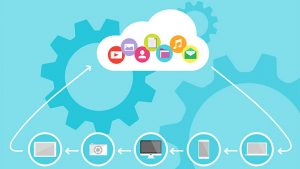
 Customer engagement software vendor, Pegasystems, has added Google Cloud Platform (GCP) to its list of supported cloud platforms. The move comes just before the annual PegaWorld Conference in Las Vegas. It means that customers can now deploy Pegasystems on Google, Azure, AWS and Pivotal Cloud Foundry.
This is all about deployment options for customers. While some have moved from on-premises to cloud, many are now looking at hybrid cloud as a better option. There are a number of reasons. Existing investment in software and the complexity of migrating to new versions and platforms are two of the biggest. Another is the increasing amount of compliance and privacy legislation that dictates where data has to be stored.
Organisations are beginning to realise that cloud software, just as with on-premises solutions, have a risk of vendor lock-in. Vendors who see themselves as cloud first, are now making sure that their software runs on multiple cloud platforms.
Importantly, they are doing this with a single code base. This is important for several reasons. It means that customers no longer have to write customised code to deploy software, they simply configure it for the underlying platform. It makes it easy to deploy on multiple cloud platforms or change cloud provider.
Vendors are also delivering a developer platform to protect any code that customers write. It allows that code to be deployed with the software irrespective of which cloud platform it runs on. This protects customers investment in the software. It also means that any updates to the vendor software or change of cloud provider does not require recoding. This helps reduce long-term cost of running software and makes staying up-to-date easier.

Frank Guerrera, chief technical systems officer, Pegasystems said: “In their ongoing digital transformation journeys, businesses need the flexibility to accelerate the value of cloud that goes beyond cost.
“Our partnership with Google Cloud allows us to provide clients with the option to leverage the power of Pega on Google Cloud’s secure and dynamic cloud platform. This expands our ability to empower clients to choose the right cloud solution that meets the challenges of today and tomorrow.”
What does this mean
Pegasystems is making sure that customers have a choice. It knows that trying to limit their deployment options will not work in the mid to long term. By adding GCP to AWS and Azure, customers can now deploy on the three biggest public cloud providers. This is good news for those customers who see hybrid cloud as the future of software deployment.