 In a world where businesses are grappling with labour shortages, soaring customer expectations, and the relentless march of technological change, Salesforce has unveiled a game-changing solution: Agentforce 2.0. Agentforce was unveiled at Dreamforce earlier this year, and Salesforce has already signed up over a thousand customers for its Agenctic AI solution.
This is a big announcement and a big bet by Marc Benioff, co-founder and CEO of Salesforce. Whereas Dreamforce had some examples of how Agentforce Agents can help organisations automate interactions, it now has several customers with live solutions making a real difference. Some of the demonstrations it gave during the launch event were impressive.
Agentforce offers a next-generation digital labour platform that aims to redefine how enterprises leverage artificial intelligence to drive productivity, efficiency, and customer success. Benioff believes that Agentforce is the answer to the global labour shortage while delivering significant productivity gains.
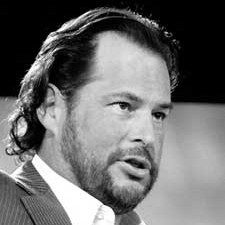
Benioff stated, “Agentforce 2.0 takes our revolutionary Salesforce digital labour platform to another level, with new reasoning, integration and customisation features that supercharge autonomous agents with unprecedented levels of intelligence, precision and accuracy.
“The demand for Agentforce has been amazing — no other company comes close to offering this complete AI solution for enterprises. We’re seamlessly bringing together AI, data, apps, and automation with humans to reshape how work gets done. Agentforce 2.0 cements our position as the leader in digital labor solutions, allowing any company to build a limitless workforce that can truly transform their business.”
A new era of digital labour
Benioff explained that the age of digital labour is here. Having taken a Waymo driverless car to the event, not every company is capable of delivering digital labour. Despite being around for a while, Waymo is still the only option in San Francisco. He believes that Salesforce has the complete platform ahead of competitors and it is a game changer.
He said, “This bridge to this new world of digital labour. I’m not sure that when we started this journey, even we fully understood it, (or) where we were going. When you look at the digital labour TAM, it’s not in the billions or 10s of billions or hundreds of billions. It’s in the trillions. In fact, it’s so new and so avant-garde that many of the analysts and firms that we have the highest respect for and work for every day haven’t even fully sized it yet.”
Proof points for Agentforce
Salesforce now has the proof point from several about what it has achieved. The demonstrations at Dreamforce for SAKS and Wiley were impressive. Now, the solution is available across its different cloud solutions, including Service, Sales and Marketing. It also has use cases within different industry sectors—Adecco in recruitment, Accenture in professional services, RBC in financial services and many others.
Greg Shewmaker, Senior Vice President of Global Operations and AI at The Adecco Group, commented, “At The Adecco Group, we are committed to creating meaningful connections between candidates and opportunities. By centralising data across over 40 systems with Salesforce’s Data Cloud and leveraging Agentforce, we’re transforming the candidate experience.
“Agentforce will help prequalify candidates, enhance CVs, and ensure faster job placements. Agentforce agents also operate 24/7, freeing recruiters to focus on meaningful connections while delivering speed and personalisation at scale.”
Salesforce is also using the technology itself for its help service on help.salesforce.com. Agentforce now handles 32,000 conversations every week and resolves 83% of cases. There are also 50% fewer escalations to humans, a drop from ten thousand to five thousand. Benioff called out that Salesforce is putting its Agents out there, unlike its competitors, in his view, proving that Salesforce has a working solution that customers can and are already leveraging.
What is Agentforce 2.0
At the heart of Agentforce 2.0 is a powerful reasoning engine called Atlas, developed by Salesforce’s world-class AI research team. It is powered by advanced natural language processing and deep learning models. Atlas enables agents to handle increasingly complex tasks and queries with unparalleled accuracy and transparency.
Agentforce is underpinned by the Salesforce Data Cloud that enables Agents to leverage data about the business, its processes and customers in context.
Agents can now seamlessly execute workflows, schedule meetings, and generate custom content like proposals. They do so with the human in the loop to maintain the trust and reliability that enterprises demand.
Agentforce 2.0 is more than just a data platform. It’s a unified system that integrates Salesforce’s entire portfolio of products and services, from marketing, sales and service automation to workflow management and analytics. This holistic approach allows agents to draw upon a wealth of enterprise capabilities, from MuleSoft’s integration tools to Tableau’s data visualisation prowess.
Agentforce is also now available within Slack, enabling organisations to create agents in the place where people work every day.
At the press conference, Silvio Savarese, EVP and Chief Scientist at Salesforce, explained why this is different. He stated, “The difference is that now these new generation of agents will operate in the real world and interact with the physical humans and physical components. So this is going to be very exciting. It’s going to pave the way for this new era of digital labors and physical labors.”
Enterprise Times: What does this mean
There is little doubt that Agentforce 2.0 is impressive. If deployed correctly with access to the volumes of data it needs, it can be a game-changer for organisations. There are some questions, though, that Salesforce seemed to avoid.
Many businesses are likely to see this as a means of, if not removing jobs, then at least slowing hiring. Against that is the cost. Agentforce charges per interaction with an initial outlay of around $2 per interaction, though no doubt there are discounts for volume. That figure is undoubtedly less than employees’ cost.
However, how do organisations protect against credits being used up needlessly, there are no doubt guardrails in place, but if the credits run out, what does an organisation do then, put pressure on its remaining human staff to answer calls and queries?
There may be some huge opportunities for new companies looking to take advantage of Agentforce to build an organisation that requires far fewer people than existing firms. Will this put pressure on those who still have human staff? The age of digital labour is dawning fast, but what will the light it sheds show?
Can organisations afford not to take a look at Agentforce 2.0? And what do other vendors do that have not yet deployed the level of Agentic AI that Salesforce has done? Do they need to catch up? Can they, or is the layered platform that Salesforce has developed difficult to replicate?