 SumUp has launched the SumUp Terminal to help it drive deeper into the Point-of-Sales (PoS) market. The new Terminal is targeted at the hospitality business and contains a host of features that will attract the attention of business owners. Among those features are the ability to add a new dish to a menu from taking a photograph, to description, to allergy data, directly from the Terminal. It is likely to lead other PoS manufacturers to rethink their product range to compete.

Tomer Sabag, Chief Hardware Officer at SumUp, said, “We see countless merchants hit a growth ceiling where a simple card reader is no longer enough, but a traditional PoS system feels too expensive and complex.
“Terminal was built to be that perfect next step. It delivers the core operational power a growing business needs with the speed, ease-of-use, and affordability that are hallmarks of the SumUp ecosystem. It’s designed to help our merchants scale in an easy and seamless fashion.”
To drive adoption, customers will be able to take advantage of SumUp’s finance option to cover the initial outlay and get themselves set up.
What does the SumUp Terminal offer?
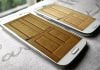
The Terminal itself is the breadth and width of a mobile phone, although the built-in printer for receipts makes it deeper. However, it is a little heavier than a phone with a protective cover. It sports a touchscreen interface that mimics the screens all too commonly found in fast food and other stores. That makes it easy for waiting staff or customers to see what they are ordering and make the right choice.
Importantly, once a dish is selected, it is possible to drill down and see the ingredients and any allergy information. With customers increasingly concerned about what is in dishes, many establishments have waiting staff going back and forth to the kitchen to check information. Having it all available in the Terminal will help speed up ordering, allowing staff to manage more customers.
The Terminal, as expected from a vendor such as SumUp, allows a customer to pay at the table. It removes the risk of card fraud from the establishment. Additionally, as the form factor is touchscreen and accepts tap-to-pay, there is no external keyboard. This eliminates the growing problem of card skimming through fake facades. It protects the business and the end customer from any problems.
Communication between the Terminal and the central PoS device is wireless, allowing waiting staff to attend tables outside of the building. It also means that businesses who attend food festivals will find it easier to make sales in large marquees and outside spaces. In addition to WiFi support, there is also a free 4G mobile data connection.
Integration and new partners
This is about more than a fancy handheld device. The SumUp Terminal is integrated across PoS, accounting and ordering systems. Integration has always been a challenge in the PoS market, although in the last few years, vendors have worked hard on it.
Out of the box, there is support for Sage, Xero and QuickBooks. Others are likely to follow based on demand from customers and SumUp partners. That partner landscape may also change here.
By having the accounting integrations, it opens the door for new partners. Accountants have already begun to adopt more partnerships with tech companies as their customers are forced to use accounting software. It’s not unreasonable to see accountants pushing small restaurants and other food businesses towards SumUp.
The integration into the supply chain is also key here. Too many kitchens struggle with stock control. Over-ordering is a major problem, leading to food waste and increasing costs.
Knowing what has been sold, when it was sold, and what ingredients were used allows for greater analytics for the business. It should be easier for businesses to identify their best-selling lines, determine which ones to drop, and track the popularity of specific dishes.
Five steps to adding new dishes
That integration is particularly evident in the addition of a new dish. In most systems, adding a new dish to the menu either means writing it on a board or giving the waiting staff daily specials. Unless the dish is going to be a regular, it rarely gets a proper entry into a PoS system and never gets an image. That’s because the time and costs of taking a photo and printing a new menu make little sense.
With the SumUp Terminal, adding a new dish is as simple as:
- Make the dish
- Photograph the food using the camera built into the Terminal
- Create a new item, name it, add the photo, add a description, allergy data and price
- Assign to a particular menu group using tags
- Add ingredient data for stock management
This is a significant saving in time compared to traditional PoS solutions. It will allow smaller restaurants to be very adaptable and give chefs more freedom to introduce new dishes. This is especially useful for establishments that prefer seasonal food and want to explore new options.
Another benefit of this is that a dish can be removed just as easily. It means there is no longer a need for menus to become bloated or stale.
Better support for staff
The introduction of new technology is often portrayed as making life easier for staff and customers. In reality, it takes time to see those benefits, and sometimes they are never achieved. In the case of the SumUp Terminal, it will start delivering immediately upon activation.
But how do you go further? The answer is to deal with that always tricky question of tips. Cash tips are easy. They are given directly to the waiting staff, although some establishments say they are then to be put into a communal pot.
Tips on a credit or debit payment are more complex. They have to go through the business accounting system. For the business, that means waiting for the money to be reconciled into its accounts before it makes payments to staff.
Most businesses will wait until the end of the month before they reconcile them and add them to employees salaries. That’s because in the UK and some other European countries, tips are seen as taxable income. That delay, for often very low-paid staff, creates stress.
The SumUp Terminal records tips as a separate line item and, importantly, enables them to be calculated at the end of each shift. It means staff can cash out tips each day, and business owners can track it through the integrated accounting.
It’s unclear whether all tax calculations are performed daily or if they should be handled monthly through the accounting software. Either way, it’s the most staff-friendly approach for waiting staff of any PoS system.
Enterprise Times: What does this mean?
Time is money, and nowhere more so than in the hospitality business. SumUp gained a foothold in that market with its Tiller acquisition in 2021. This is the first big change it has made in that market since then. It is not unreasonable to describe this as the most significant update to the company’s product line, let alone its PoS offerings.
The Terminal feature set and flexibility, address most, if not all, the needs of a hospitality business. It also suggests that there are other opportunities for the Terminal.
Currently, it is a front-of-house system. There is nothing to stop it from being used for managing mini-bars and even housekeeping supplies in hotels. It would not take much to add new features through an app marketplace. It is something worth watching as SumUp continues to grow.
The Terminal is going to make other PoS providers sit up and take notice. It will be interesting to see who responds to this launch and how quickly SumUp can monetise its lead.
At the launch, Enterprise Times talked extensively with Luke Griffiths, Chief Commercial Officer at SumUp. That will be published next week. In it, we ask him about the possibility of an ecosystem and the financing services that SumUp offers, and what customers can expect to see next.