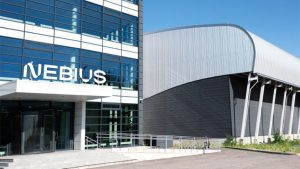
 Nebius is planning to triple the capacity of its data centre in Mäntsälä, Finland. Once the upgrade takes place, the data centre will use 75 MW. That will allow it to install 60,000 GPUs and take projected income to over US$1 billion.
That revenue projection from the Mäntsälä data centre is important. It matches the investment that the company is planning to make in its European AI infrastructure by mid-2025. Some of that investment will be in brand-new data centres at greenfield sites and in co-location facilities. It recently announced one of those co-location sites in Paris.
Nebius plans to deploy NVIDIA H200 Tensor Core GPUs in its Mäntsälä data centre. It already uses NVIDIA H100 Tensor Core GPUs as the backbone of Nebius’ fleet of NVIDIA GPUs.

Andrey Korolenko, Head of Infrastructure at Nebius, said: “Tripling capacity at our flagship site in Finland is an important step in our build-out of best-in-class AI infrastructure in Europe. Our data center at Mäntsälä is our ‘home base’ and showcases our ambition and the technical capabilities of the Nebius team, as well as our approach to adopting sustainability principles in our infrastructure.
“The capacity we are adding here during this expansion phase will enable us to better serve growing demand from AI builders globally.”
Building a greener AI infrastructure
AI infrastructure is not seen as being green due to the power consumption of the data centres where the GPUs are located. However, Nebius wants to change that perception, and its flagship data centre is an example.
Deploying the latest, more energy-efficient NVIDIA GPUs is one example of that. Additionally, Nebius also says it will be one of the first providers in Europe to bring the state-of-the-art, energy-efficient NVIDIA Blackwell platform to customers in 2025.
Mäntsälä also boasts a power usage effectiveness (PUE) of 1:1 under high loads. This makes it one of the most efficient data centres in Europe. Its use of free cooling has reduced its reliance on traditional cooling technologies.
Another technology deployed at Mäntsälä is heat recovery. It takes the excess heat generated by the servers and uses that to provide heating for local residential heating. At present, the system recovers over 20,000 MWh of energy per year, providing heat to the equivalent of 2,500 Finnish homes. The extension of the data centre will increase the heat recovery programme.
Enterprise Times: What does this mean?
The growing demand for AI means data centre operators are rushing to deploy GPUs and the infrastructure to meet it. That means purpose-built data centres with access to the power that GPUs require. For companies like Nebius, meeting customer demand also means meeting sustainability standards.
For Nebius, this move will continue to strengthen its position as a leading provider of AI infrastructure. Tripling the capacity at its data centre in Mäntsälä, Finland, will not only deliver to customers but also generate significant income for the company. It will be interesting to see where the company plans its next data centre.